Most people start a loft conversion feeling confident. Plans look simple enough. Then work begins and the reality sets in. A loft or attic was never built as habitable space, and turning it into compliant living space means dealing with structure, access, fire safety, and thermal performance all at once, not one problem at a time.
This is why so many common challenges repeat across UK projects when decisions are made without early expert advice. Much of that risk comes down to choosing the right contractor before any design or cost assumptions are fixed.
At Neo Lofts, we approach each project with the aim of eliminating common mistakes before construction begins. That means careful planning supported by engineering input and compliance-driven decisions.
Potential challenges and solutions
Before drawings or budgets are committed, it helps to understand what truly shapes a loft conversion project. The roof cannot be moved, the loft space comes with fixed dimensions, and the rest of the house still has to work as a home during construction. Navigating these limits requires careful planning, which is where experienced specialists offer practical solutions instead of one-size-fits-all layouts.
Possible issues that can arise during a loft conversion
These issues are not unusual or extreme. They are the predictable consequences of turning roof voids into regulated accommodation.
Headroom and roof geometry in real properties
The most immediate constraint is headroom, which varies significantly depending on the type of loft and roof construction. Many UK homes, particularly Victorian terraces and post-war semis, have shallow roof pitch angles. In these properties, the size of the conversion is often limited by how much usable height can be achieved within the existing roof envelope. In properties with a hipped roof, a hip-to-gable loft is often considered to increase internal volume and improve headroom along the side elevation.
While the empty loft may feel open, the addition of a new floor structure, fire protection, and insulation significantly reduces usable height. Because of the internal slope of the rafters, only a narrow central area usually meets comfortable standing height, and this defines the loft feel once the space is complete. Sloped ceilings then dictate how furniture, circulation routes, and storage can be arranged.
In many cases, roof windows are used alongside or instead of dormers to bring daylight into areas where headroom is limited, but their positioning must account for roof pitch, fire escape requirements, and overheating risk in south-facing lofts. Treating roof windows as a substitute for usable floor area is a common problem in early designs.
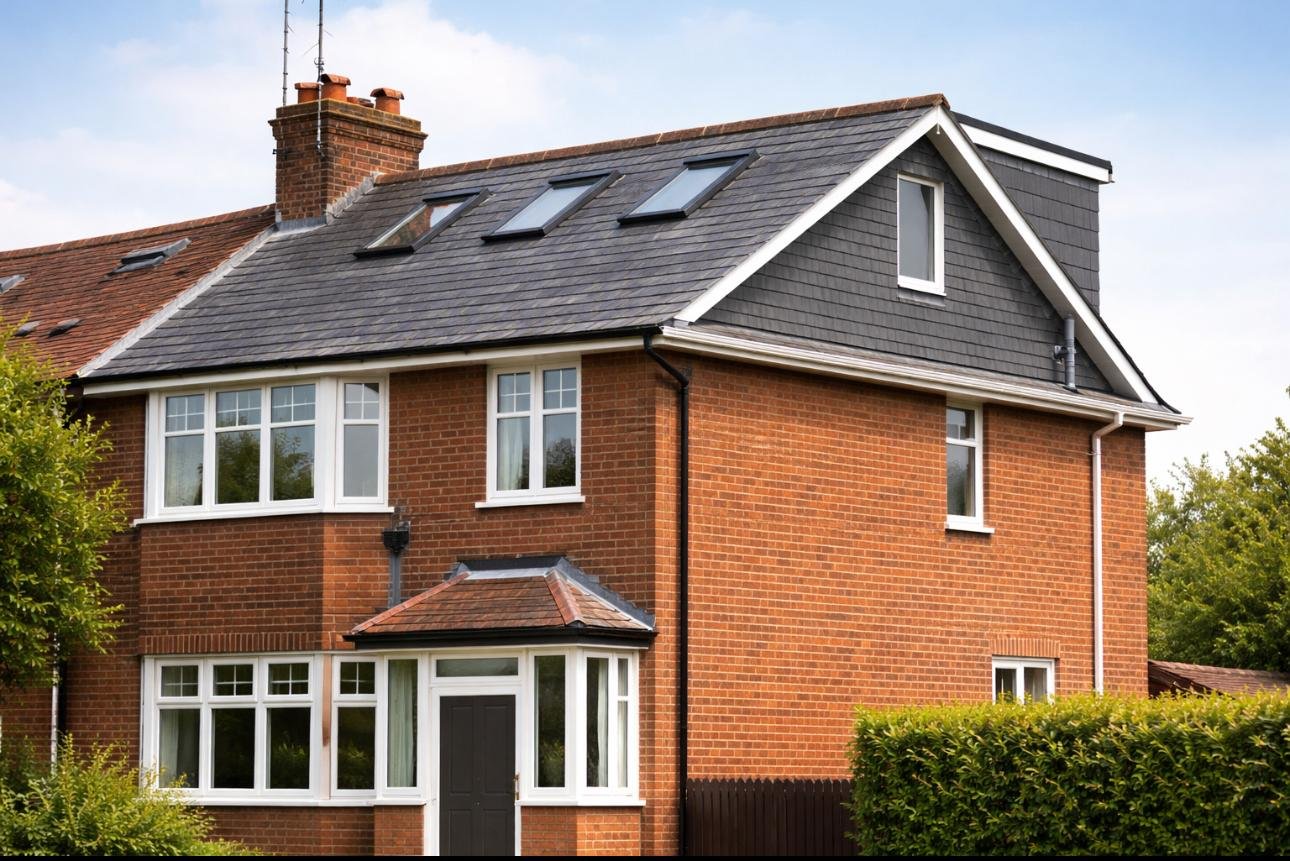
Where this becomes restrictive, a dormer is often required. A rear dormer loft or full dormer loft conversion, achieved by adding dormer windows, increases vertical wall height and creates floor area that can be used without constant compromise. Without this, many converted loft layouts struggle to function beyond occasional use.
Structural capacity and the existing loft
Another frequent issue arises from the existing loft floor. Original ceiling joists are not designed to support people, furniture, or bathrooms. As a result, loft spaces often need structural reinforcement before they can be considered usable living accommodation.
Before anything moves forward, a structural engineer must assess the roof structure and design steel beams that transfer loads to load-bearing walls, as additional steelwork may be necessary to support the new floor. This keeps structural integrity intact, prevents long-term movement, and defines workable positions for stair openings and storage solutions.
In terraced and semi-detached homes, those beams often sit within a party wall, creating legal obligations that must be addressed before construction proceeds.
Staircase placement and access
The staircase introduces both spatial and regulatory challenges. UK building regulations control pitch, riser height, tread depth, and minimum headroom above the stair line. In many homes, the only compliant stair position cuts into rooms below, often reducing bedroom size or changing circulation.
Without meeting these standards, the staircase will fail inspection by building control. These access requirements explain why the loft space can be challenging, with compliance influencing the wider house.
How to handle unexpected challenges and delays
Delays are rarely caused by poor workmanship alone. They usually stem from gaps between planning and execution that only become visible once construction starts.
What tends to emerge once work starts
When ceilings and floors are opened, it is common to uncover altered roof structure, undersized timbers, or historic work that no longer meets current standards. These discoveries often affect programme and loft conversion cost. Proceeding without adjustment increases risk rather than saving time.
A defined contingency exists to deal with these realities. It allows structural or design changes to be implemented properly, rather than rushed through to maintain momentum. Without this allowance, structural changes or compliance upgrades quickly become unexpected costs rather than managed adjustments.
Planning and approval timelines
Another frequent cause of delay is misunderstanding how local planning policy works. Many loft conversions fall under permitted development and don’t need planning, but not all designs qualify. Others clearly require planning. A mansard loft, front-facing dormer windows, or work involving an area of flat roof will usually require planning permission and formal planning consent from the local authority.
Even where a project doesn’t need planning, written confirmation reduces risk. Incorrect assumptions here regularly lead to delays and potential legal issues later in the process.
Managing inspections properly
During a loft build, local building control needs to inspect the work at set points. These include structural steel installation, insulation, fire protection, and completion, all required before the new loft can be approved as habitable space. Each inspection confirms compliance with building regulations at that stage. Miss one, and the site can grind to a halt. Strong project management keeps the sequence right so inspections happen without delays.
Common misconceptions about loft conversions and their solutions
Many frustrations arise when early loft conversion ideas do not align with regulatory or structural reality once detailed assessment begins.
Assuming every loft conversion delivers the same result
A common loft conversion is often presented as a repeatable product. In reality, no two lofts share identical dimensions, structure, or planning history. Differences in headroom, roof layout, and access mean each loft conversion design must be developed around specific constraints.
Planning permission misunderstandings
Some homeowners assume all projects require planning permission, while others assume none do. In practice, planning depends on property type, design, and location. Flats always require planning permission, while houses may or may not, depending on whether proposals remain within permitted development limits and local controls.
Underestimating building regulations
Building regulations are often treated as a checklist. In reality, they drive major design decisions. Fire safety upgrades frequently extend beyond the loft room, affecting doors, alarms, and circulation routes throughout the house. These works are mandatory to meet building regulations and achieve final approval.
Testimonials from homeowners who have faced and resolved challenges during their loft conversion
The reality of a loft conversion becomes clearest when you look at projects where progress initially stalled and where overcoming common design challenges changed the outcome. In both of the cases below, the homeowners were not dealing with unusual requests. They were dealing with common challenges that had not been properly assessed or resolved before work was promised.
In Wandsworth, the homeowners had already lost months speaking to builders who assured them their loft could be converted easily, without addressing the constraints of the loft space itself. Limited headroom, an awkward roof layout, and unresolved party wall matters meant that no one had been willing to take responsibility for a compliant solution. What they needed was not another set of sketches, but a structured loft conversion that worked within those limits.
As the homeowner explains:
The solution was an L-shaped dormer loft conversion designed to increase usable floor area where height was most restricted. Steel beams designed by a structural engineer resolved the load paths, and the staircase was repositioned to meet building regulations without disrupting the floor below. The finished loft now functions as a full master suite and has added clear space and value, reflected in increased property value.
In Leytonstone, the challenge was not lack of space but complexity. The homeowner wanted a bespoke attic conversion incorporating a zinc-clad dormer and a bay view window. Several companies were reluctant to take this on because the proposal clearly required planning permission and careful coordination with the local authority.
As the homeowner described the experience:
This attic conversion involved managing planning consent, coordinating inspections with building control, and resolving structural detailing before work progressed. The completed space benefits from controlled ventilation, strong natural light, and a layout suited to everyday use rather than just visual appeal.
In both projects, the constraints were typical of UK housing. Limited headroom, structural limitations, and planning requirements are not exceptions. What changed the outcome was addressing those issues directly and early, rather than attempting to work around them.
Tips for avoiding common pitfalls during a loft conversion
Avoiding problems is largely about sequence and verification rather than speed.
Start with measured facts, not assumptions
Confirm headroom, roof pitch, and structural capacity before committing to layouts. This prevents redesign during the design phase.
Resolve access early
The staircase influences fire safety, layout, and compliance. Once this is resolved correctly, other design decisions become clearer.
Treat insulation and ventilation as a system
Good loft insulation without proper ventilation leads to condensation and higher heating costs. A rooflight loft or velux loft conversion can improve airflow and natural light when detailed correctly.
Confirm planning status before committing
Establish whether proposals fall under permitted development or require planning permission before construction begins. Incorrect assumptions at this stage often lead to enforcement action.
Design for long-term use
The way a loft feels day to day matters more than how much floor area it shows on paper. A functional space supports circulation, sensible storage, and real comfort, especially when the loft becomes a home office. Noise transfer and temperature control regularly present challenges when they are treated as secondary issues.. A well-designed loft conversion prioritises usability over maximising square metres.
Converting a loft with informed expectations
By the time most homeowners reach the point of committing to a loft conversion, expectations have usually shifted. What started as an idea about space becomes a conversation about structure, regulation, and long-term impact. A loft conversion is not a surface-level change. It is a regulated structural alteration and should be treated as a serious home improvement project.
Converting your loft successfully depends on accurate surveys, compliance with building regulations, and design solutions that reflect how the building actually behaves. When those elements align, a loft extension can change how the loft works day to day, improve energy efficiency, and add lasting value to your home.
At Neo Lofts, this way of thinking underpins every project, shaping decisions long before construction begins.