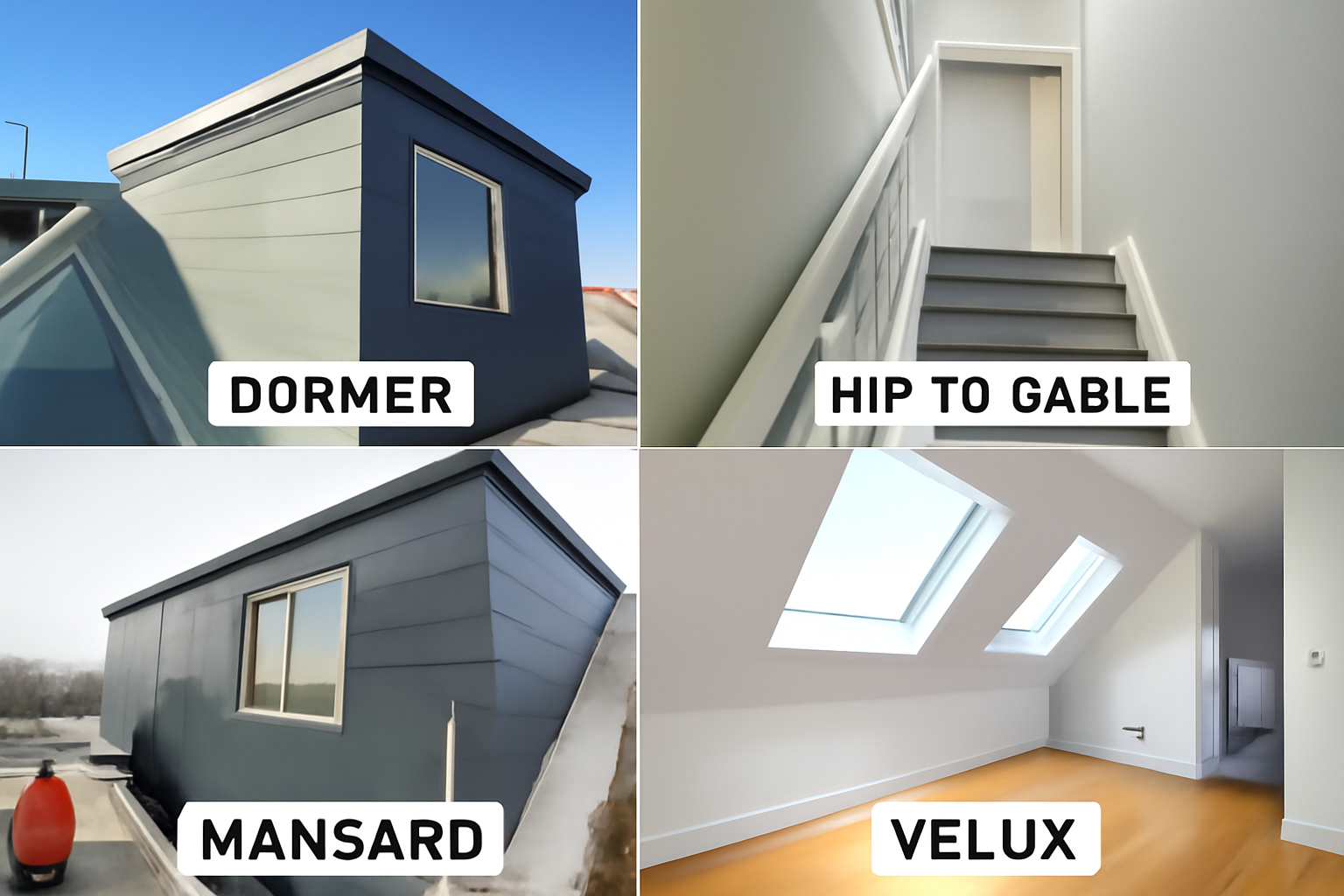
A loft conversion in London functions as a wise investment for home value improvement and space expansion but choosing the right option becomes challenging because of the many available alternatives. Neo Lofts provides complete assistance to homeowners from start to finish in their search for loft conversion solutions which match their budget and personal space needs. The selection of Velux dormer or mansard loft conversions should match your personal requirements to make the most of your current space in any home from Victorian terraces in Kensington to Edwardian semi-detached houses in Putney and 1970s homes in Croydon. Quick summary
Quick summary
- Dormer: Most common and versatile. Adds headroom and usable floor space.
- Hip-to-Gable: Best for hipped roofs; creates a larger attic footprint.
- The design of Mansard roofs allows for maximum space utilization through their vertical walls which architects commonly use on terraced urban streets.
- Velux (Rooflight): Least invasive and cheapest; best for small conversions.
Dormer Loft Conversion
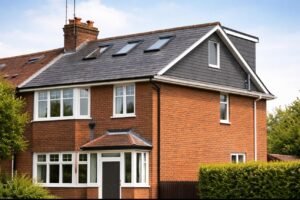
A dormer loft conversion provides additional space for people who need more room than a small office or bedroom because it creates extra headroom and floor area. The construction of a box-like structure from the roof allows them to create additional space when they need more than just a small office or bedroom or children’s play areas. The narrow layout of London’s Victorian terraces makes dormer conversions an effective way to create extra living space while preserving the original architectural style of the building.
Depending on your home, our team will design a rear dormer that qualifies for permitted development rights or create an L-shaped dormer average price range for dormer conversion projects falls between £50,000 and £70,000 which delivers excellent value for the expanded living area. . Our team at Neo Lofts designs loft conversions that match seamlessly with your home while making the most of every square metre.
Pros
- Increases usable floor area and headroom significantly.
- Flexible layouts — can accommodate bedrooms, bathrooms or home offices.
- Generally straightforward to build on terraced and semi-detached houses in London.
Cons
- Visible from the street — may need design care in conservation areas.
- Requires structural work and insulation upgrades.
The typical cost of a London-based project lies between £25,000 and £60,000. The construction process takes 4 to 8 weeks including the time required for design work and obtaining approvals.
Hip-to-Gable Loft Conversion
The process of transforming a hipped roof which slopes on all sides into a gable end allows you to raise the ridge and create additional internal space.
Pros
- The approach works particularly well for houses that have a hipped roof and are either attached to another home or stand alone.
- The design creates a large rectangular space which works well for building entire bedrooms and bathroom suites.
Cons
- More structural work than a dormer; can be more expensive.
- The roofline adjustment might lead to planning restrictions in particular London boroughs because it represents a substantial alteration.
The typical cost of a London-based project lies between £35,000 and £70,000. The construction process takes 6 to 10 weeks including the time required for design work and obtaining approvals.
Mansard Loft Conversion
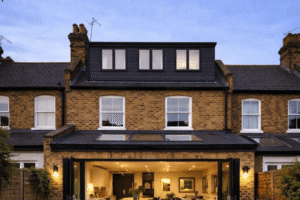
A mansard loft conversion provides the ideal solution for creating a complete transformation of your living space. Unlike Velux or dormer options, a mansard alters the shape of your roof entirely, producing near-vertical walls that maximise headroom and usable space throughout the loft.This makes it perfect for Edwardian semi-detached homes, detached properties, or any house where you want multiple bedrooms or a high-end master bedroom.
Mansard conversions are more involved, often requiring planning permission due to the significant structural changes, and costs can start from £70,000 and go up depending on the scale of the project. The process of converting your home space leads to a complete transformation which results in maximum space utilization and value increase.
Pros
- Maximises internal space — often adds a full extra storey’s worth of accommodation.
- Creates rooms with straight walls and high usable volume — great for large bedrooms or flats.
Cons
- Most expensive and complex. Typically requires full planning permission in London.
- Can change the appearance of the property significantly — design-led approach is needed.
The typical cost of a mansard loft conversion project lies between £50,000 and £120,000. The construction process takes 8 to 14 weeks including the time required for design work and obtaining approvals.
Velux Loft Conversion
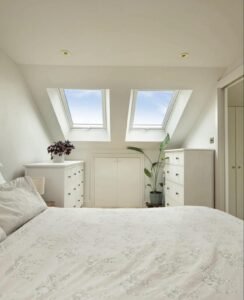
A Velux loft conversion, also called a rooflight conversion, is one of the simplest ways to transform your loft. The existing roof structure is utilise rather than changing the its design, we install skylight windows to give the open space with natural light. This creates an open, perfect light-filled space for your home office, a small bedroom, or even a creative studio. Velux conversions are usually less disruptive and faster to complete, often taking around four to six weeks, making them ideal if you want a practical, a quick stylish upgrade. without the stress of a full-scale renovation or a longer timelines for a larger conversion.
While this type of conversion is usually more affordable, starting from around £40,000 to £45,000, it does offer some considerations. The existing roof shape can restrict headroom along the edges, which will lead to install it best to at least a roof slope for 35 degree to 40 degree and the total usable floor space tends to be smaller than what a dormer or mansard conversion can offer. However, for many homeowners, the ease of installation and modern, light-filled feel make this conversion a popular first choice for a functional space without major structural changes.
Pros
- Lowest cost and least invasive option.
- Often falls under permitted development — quick to deliver if requirements met.
- Good for smaller houses and where street appearance must be preserved (conservation areas may still allow).
Cons
- Limited headroom and floor space — best where the loft already has sufficient height.
- Layout constraints due to sloping ceilings.
The cost of a velux loft conversion project lies between £15,000 and £30,000. The construction process takes 2 to 6 weeks including the time required for design work and obtaining approvals.
Which is right for your London home?
Consider these factors:
- Roof type: The hipped roof design works well with the hip-to-gable style. The mansard roof operates effectively when placed on terraces that have entry points at the back. The dormer design fits multiple Victorian and Edwardian architectural styles.
- The Velux system operates best in loft areas which already have sufficient vertical space. The desired space hierarchy follows this pattern: Mansard ranks above Hip-to-Gable which exceeds Dormer and Velux.
- The budget for window installation follows this order from least to most expensive: Velux (lowest cost) then Dormer followed by Hip-to-Gable and finally Mansard (highest cost).
- The approval process for different window types varies: Velux windows generally receive automatic approval but dormers require permission when they stay within set boundaries and hip-to-gable and mansard installations need official approval for London areas. The Velux system needs the least amount of approval for installation in conservation areas
Planning permission & building regulations in London
Most loft conversions must meet Building Regulations regardless of type. Planning permission depends on the scale, roof alteration and the borough. Permitted development rules allow many Velux and small dormers, but larger works, mansards and changes to your roofline often need full planning approval. Always check with your local borough council or a planning consultant before starting. For more details about planning permission and building regulations in London, refer to the UK Government’s Planning Portal.
Practical tips for London homeowners
- Get an initial survey to assess roof height, trusses and structural needs.
- Speak to neighbours early if the work affects shared walls or party structures.
- Factor in party wall agreements and possible party wall awards for semi-detached/terraced homes.
- Work with an architect or experienced loft experienced loft conversion specialist who knows your borough’s planning approach.
Estimated timescales from idea to completion
- Estimated timescales from idea to completion
- Design & measurements: one (1) – four(4) weeks.
- Planning application (if required): eight (8)– twelve (12) weeks (can be longer if revisions needed).
- Building Regulations approval: two(2)– six(6) weeks (overlaps with planning in some cases).
- Construction: 2–14 weeks depending on type.
Frequently Asked Questions
Will I need planning permission for a loft conversion in London?
It depends. Small Velux and modest dormers often fall under permitted development. Larger roofline changes, mansards and hip-to-gable conversions commonly require planning permission. Check with your local council or consult a planning specialist.
How much extra value does a loft conversion add?
A well-designed loft conversion can add significant value — typically 10–20% to the property price, depending on quality, location in London and the type of conversion.
How disruptive is the build?
Velux conversions are least disruptive. The structural modifications required for dormers and hip-to-gable additions fall into a moderate category but mansards need extensive structural modifications which makes them the most disruptive. The construction work will generate noise and dust while scaffolding will remain in place for multiple weeks.
To begin your search for loft conversion possibilities in London you need to schedule a site assessment with either a loft expert or an architect. The selection process requires you to evaluate your roof construction type and financial limits and development requirements and available storage capacity.
Summary
Velux conversions offer an affordable solution for most London homes because they require minimal structural changes. The combination of space and affordability makes dormer conversions an excellent choice for home expansion. The hip-to-gable conversion stands as the most suitable option for hipped semi-detached houses and end-of-terrace homes which require additional space. The mansard conversion method produces the highest space increase but stands as the most expensive option which typically requires official planning permission. The selection of loft conversion depends on four key factors which include your roof type and desired space and budget limitations and local planning regulations. Thinking about loft conversions in London? The best way to get a specific recommendation and cost estimate for your home is to talk to a local architect or loft conversion expert.