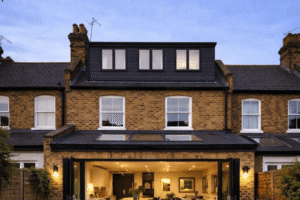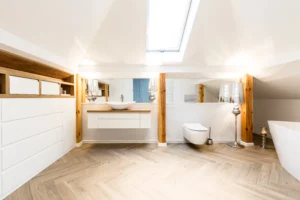

A loft conversion changes the area under your roof into a living space through structural changes that produce a new room. The guide provides detailed information for planning and building a home with a loft conversion.
What is a loft conversion?
A loft conversion creates new living space from roof areas that people do not use or only partially use which can become bedrooms or home offices or bathrooms or rental units. The residents of London select loft conversions as their main solution for adding space and enhancing property value because this approach enables them to remain in their existing residences.
Why choose a Loft Conversion in London?
- Increases usable floor area and market value.
- Often cheaper and faster than moving or building an extension.
- Good option for terraced and semi-detached properties common in London.
- Potential for en-suite rooms, home offices or Airbnb income (check leasehold/lease and local regulations).
Common Types of Loft Conversions
- Rooflight (Velux) loft conversion
Least structural change: install skylights in the existing roof. Ideal when head height is sufficient. Often permitted development where conditions are met. A velux conversion is ofter faster, less expensive and more non intrusive than other coversion.
- Dormer loft conversion
Most common in London. A box-like extension to the roof plane creating vertical walls and more floor area. Variants include single, double (hip-to-gable plus dormer) and L-shaped dormers.
- Mansard loft conversion
Involves changing the slope of the roof to create nearly vertical rear walls. The design provides maximum space and headroom, but it requires significant changes to the building structure, and usually needs official planning approval.
- Hip-to-gable loft conversion
Converts a hipped roof into a gable to increase volume — common on semi-detached properties. Hip to gable loft conversion typically used for semi-detached, detached, or end-of-terrace properties and is often combined with a rear dormer to create even more space.
- Combination conversions
Mix of dormer and hip-to-gable or mansard plus rooflights to maximise space and light.
Planning Permission & Permitted Development in London
The majority of loft conversions qualify as Permitted Development (PD) because they follow specific rules which eliminate the need for planning approval. The restrictions for terraced houses limit roof additions to 40 cubic metres while detached houses can have up to 50 cubic metres. The front roof slope must remain within its current boundaries for any renovations to be permitted. The construction materials need to maintain their original visual characteristics. The design forbids any form of veranda or balcony addition. The structure must maintain its height within the established limits.
- Listed buildings and some conservation areas require planning permission.
- Article 4 directions in parts of London remove PD rights — check with the local borough council.
- If your property is a leasehold, or if you plan to alter the exterior facade, you might still require consent from the freeholder for a loft conversion.
It is always advisable to consult your local planning authorities and construction standards. Filing a planning request may be the more prudent approach if you desire an elaborate design or reside in a conserved zone.
Construction Standards & Specialized Demands
Even if planning approval is not mandated, loft conversions must adhere to Construction Standards pertaining to:
- Structural soundness and footings (computations for beams, steel girders).
- Fire precautions: escape passages, fire-resistant doors, fire barriers, and smoke detectors (ideally interconnected via mains wiring).
- Insulation and airflow: heat efficiency and dampness management. Stairwells: minimal breadth, overhead clearance, and safety rail mandates.
- Electrical and plumbing tasks must be certified by authorized professionals.
- You’ll need either an initial notice to your local authority via an approved inspector or to have the local council inspect works at key stages.
Costs of a Loft Conversion in London (typical ranges)
The expenses associated with properties differ based on their classification and dimensional measurements and their existing state and level of completion. Typical loft conversion cost:
- Rooflight/Velux conversion: £38,000–£40,000.
- Small dormer conversion: £40,000–£55,000.
- Large dormer or hip-to-gable: £55,000–£70,000.
- Mansard conversion: £75,000–£120,000+.
Different factors to consider a in your budget for a loft conversion process includes expenses such as structural engineer fees which range from five hundred to two thousand British pounds and architect/technician drawings that cost between eight hundred to four thousand British pounds as well as party wall agreements and building control expenses and planning application costs along with value-added tax at standard 20% levels that change for specific projects and interior finishes and furniture costs.
Timescales
Typical timelines depend on scale:
- The design and approval phase typically lasts between 4 and 12 weeks while waiting for survey results and drawings to be completed and optional planning.
- Construction lasts between 4 to 12 weeks for small and medium projects but requires 12 to 20 weeks or more for large or complex conversion projects.
- The main reasons for delays are unexpected structural problems and disputes with neighbors during Party Wall Act disputes along with planning discussions and waiting for materials to be available.
Legal & neighbour considerations in London
Party Wall etc. Act 1996
Most loft conversions require compliance with the Party Wall Act if works affect shared walls, rooflines or require scaffolding over a neighbour’s property. Serve notice early and consider appointing a party wall surveyor.
Leasehold and freehold issues
If you are leasehold, check your lease for restrictions and obtain the freeholder’s consent. Freeholders may require licence for alterations.
Choosing a team: architect, structural engineer, contractor Architect/technician: prepares drawings, advises on design, planning and space layout. Structural engineer: designs steel beams and joists; provides calculations for building control and contractor installation. The selection of a team consists of three essential roles which include
Neighbours & access
The construction team needs to notify their neighbors before they start working while maintaining ongoing communication. They must also handle scaffolding and site access properly to prevent any conflicts from developing.
Choosing a Loft Conversion Specialist: Architect, Structural Engineer, Contractor
Architect/technician: prepares drawings, advises on design, planning and space layout.
- Structural engineer: designs steel beams and joists; provides calculations for building control and contractor installation.
- Contractor/loft company: delivers construction services and handles subcontractors and site operations. The market in London contains numerous companies which provide design-and-build services.
The verification procedure includes confirming references, reviewing previous projects, validating public liability and employer’s liability insurance, and ensuring affiliation with professional bodies such as the Federation of Master Builders.
Get at least 3 detailed written quotes and a clear contract with payment milestones and warranties.
Design & practical tips for London homes
- The design should include dormer windows and rooflights that face south or west to achieve maximum natural light. The design should include storage solutions which fit into the spaces under eaves and sloping walls.
- Consider sound insulation — London homes benefit from robust party wall and floor insulation.
- Plan for plumbing runs if adding bathrooms — vertical soil stacks and waste routes are crucial.
- Think about heating and hot water capacity; you may need a new boiler or additional system upgrades.
- Preserve character: match external materials sensitively, especially in conservation areas.
How much value does a loft conversion add?
A successful loft conversion tends to increase London property values by 15 to 20 percent but actual returns depend on location and finish quality and market demand. The amount of uplift tends to increase in central locations and areas with limited bedroom availability.
Checklist before you start
Survey the loft: head height, roof condition, existing joists and chimneys.
- Check planning restrictions and Article 4 directions with your London borough.
- Confirm leasehold/freehold permissions.
- Get Party Wall notices served if needed.
- Obtain structural engineer and architect drawings.
- Choose contractor and sign a detailed contract.
- Arrange building control or approved inspector.
- Plan for temporary living disruption and storage during works.
Frequently Asked Questions
Do I need full planning permission in London?
Not always — many conversions are permitted development, but exceptions include conservation areas, listed buildings, Article 4 areas and large mansard changes. Always check with your local borough.
Can I convert the loft in a Victorian terrace in London?
Yes; dormer conversions are common. However, you may be in a conservation area or face Article 4 restrictions. Design sympathetically to the street scene.
How high does the roof need to be?
Generally you need at least 2.2–2.3m of head height at the highest point to create comfortable living space; conversion is still possible with creative structural solutions but costs rise.
Can I rent out the converted space?
Often yes, but check planning use class, HMOs/licensing rules, leasehold terms and fire safety requirements. Short-let platforms also have local rules and building insurance implications.
Next steps
If you want to do a loft conversion in London then you need to schedule a professional loft survey followed by requesting drawings and cost estimates from established local contractors and finally contact your local council planning department to check restrictions. Early engagement with a structural engineer and party wall surveyor will reduce delays. For tailored advice, gather photos, property address and basic measurements and consult a loft specialist for a feasibility assessment.
Loft conversion London guide. This page provides general information and is not a substitute for professional advice from architects, structural engineers or planning officers.